This post was first published in the parish newsletter of St. John's Church, the Vaya Con Dios.
Friday, January 25, 2013
Justice And Blood
This post was first published in the parish newsletter of St. John's Church, the Vaya Con Dios.
Friday, August 31, 2012
Say "Thessalonians" Three Times Really Fast
The 27 books of the New Testament begin with Matthew and end with the Revelation to John. Marcus Borg rearranges them according our best understanding of when in the first century the texts were actually written. He starts with St. Paul's first letter to the Thessalonians (generally understood to be the oldest Christian document) and ends with 2 Peter. Teaching all these books to seventh graders at St. John's, the most radical thing I do is have students read Mark (the earliest gospel) before Matthew.Monday, March 19, 2012
Things That Were Said Back In Those Days
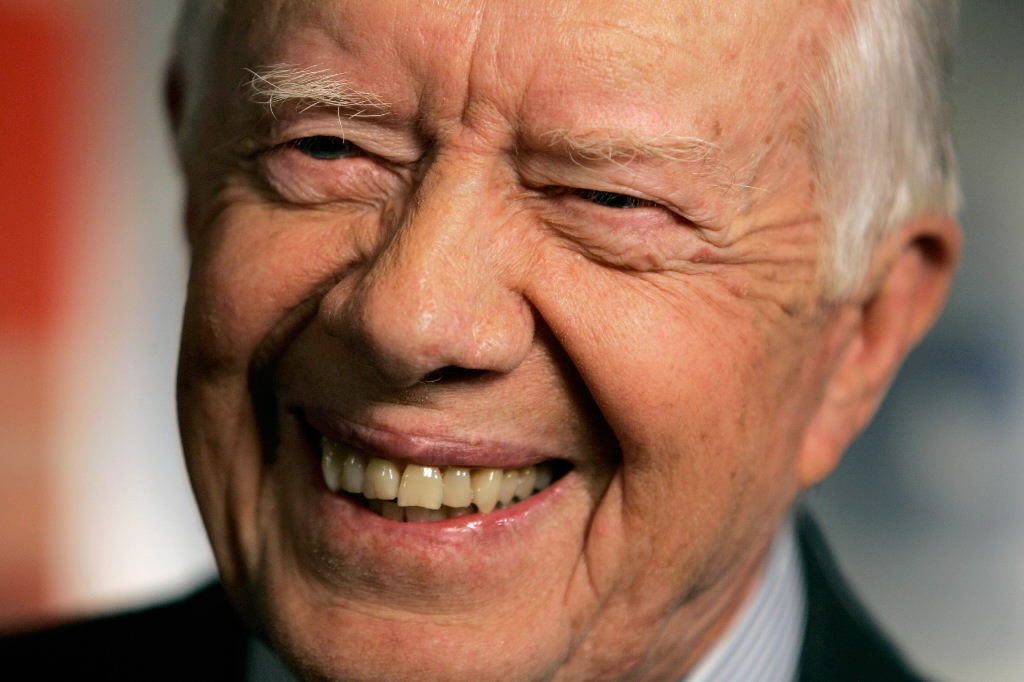
In response to questions from Paul Brandeis Raushenbush at the Huffington Post about the Bible's teachings on gender and sexual orientation, Sunday school teacher and former President Jimmy Carter gives us some of that old-time historical and cultural criticism:I separated from the Southern Baptists when they adopted the discriminatory attitude towards women, because I believe what Paul taught in Galatians that there is no distinction in God’s eyes between men and women, slaves and masters, Jews and non-Jews -– everybody is created equally in the eyes of God.
There are some things that were said back in those days –- Paul also said that women should not be adorned, fix up their hair, put on cosmetics, and that every woman who goes in a place of worship should have her head covered. Paul also said that men should not cut their beards and advocated against people getting married, except if they couldn’t control their sexual urges. Those kinds of things applied to the customs of those days. Every worshipper has to decide if and when they want those particular passages to apply to them and their lives....
Homosexuality was well known in the ancient world, well before Christ was born and Jesus never said a word about homosexuality. In all of his teachings about multiple things -– he never said that gay people should be condemned. I personally think it is very fine for gay people to be married in civil ceremonies.
I draw the line, maybe arbitrarily, in requiring by law that churches must marry people. I’m a Baptist, and I believe that each congregation is autonomous and can govern its own affairs. So if a local Baptist church wants to accept gay members on an equal basis, which my church does by the way, then that is fine. If a church decides not to, then government laws shouldn’t require them to.
Saturday, February 18, 2012
A Tale Of A New Translation
The Gospel Truth?
Tuesday, February 14, 2012
Love Divine, All Loves Excelling
After all, isn't this mixture of emotions and motivations pretty representative of our experience? We love our partners and our children and our pets and friend and, if we're lucky, our jobs and hobbies and much more, but not all in the same way. And even our love for a single person varies and changes, not just over the years, but over the span of moments, as passion can turn to tenderness, which can turn to a desire to protect and serve, and then turn back to desire, all between the beats of a simultaneously fickle and courageous heart. In light of this, maybe the best we can say is that love in the Bible, like love in our everyday lives, is important, complicated, and at times a bit squishy. That is, it is too powerful and mysterious to be fully defined or grasped by any of us.
So perhaps for now it's enough to recognize that all the different kinds of love we have explored are part and parcel of our life in this world, that God created and blessed them for our nurture, and that behind and beyond all of our expressions of love is God's love for each of us. That's not everything we could say, of course, but I think that if we get that much straight we've probably gotten the heart of what the Bible has to say about love.
Tuesday, January 3, 2012
I like Gen. 1's Version Better, Anyway
As Rick Warren, Saddleback's energetic pastor, adds the the cause of America's alarming biblical illiteracy to his portfolio, Paul Wallace wonders if influential Christian leaders are contributing to a rise in scientific illiteracy:I suspect more moderate leaders like Warren have a lot to do with it. Warren’s own views on evolution, while less hysterically expressed than those of [Albert] Mohler and [Ken] Ham, are not finally distinguishable from them. In a 2007 Newsweek debate with Sam Harris, Warren declared, “Do I believe in evolution[?] The answer is no, I don’t. I believe that God, at a moment, created man... Did God come down and blow in man’s nose? If you believe in God, you don't have a problem accepting miracles. So if God wants to do it that way, it's fine with me.”
In his opinion on evolution, Warren displays his own considerable scientific illiteracy. That in itself is not too big a deal; one man rejecting evolution is not news. But when that man is Rick Warren, a major Christian figure who has, despite his conservative credentials, pushed the evangelical envelope on a number of environmental and social issues, the rejection carries a lot of freight.
Sunday, April 24, 2011
Thursday, March 17, 2011
The Bible And The Patience Of God
[T]his information about the Bible is compatible with belief in it. A person can simultaneously accept these truths about the Bible and the Bible as the Word of God. Doing so may require recalibrating assumptions, though, to allow for the possibility that God patiently works through people and time, enjoys a good debate and prefers inviting conversation over issuing absolutes.
Tuesday, February 15, 2011
Words And The Word
I’ve been thinking about words lately. I’ve been looking up words like, evangelical, liturgical, orthodox, protestant, emergent… in my Bible. I tried the NLT, NIV, TNIV, NRSV, JB, NKJ, NASV, even The Message – but I couldn’t find any reference to them, let alone any instruction as to which one is the “right way” of practicing our faith.I did however find a lot of references to the poor, widows, orphans, brokenhearted, captives, lost, oh yes, and “One Body.” I’m beginning to think that maybe were focusing on the wrong words?
Saturday, January 29, 2011
The Nephilim Explained?
You don't have to be a Neanderthal to find intriguing correlations between scripture and modern science -- once you're willing to accept that God's normal workday runs a bit longer than ours.New archaeological finds suggest that human migration from Africa into Mesopotamia and beyond began as long as 127,000 years ago. From DNA evidence, scientists had previously concluded that the exodus started just 60,000 years ago.
Especially interesting is the speculation about where homo sapiens may have encountered and bred with Neanderthals. Nicholas Wade writes in the New York Times:
Jebel Faya is near the Persian Gulf, which is now a shallow sea. But before 8,000 years ago, when the sea level was about 330 feet lower than today, the gulf area was a low-lying plain, with the Euphrates running through it. The region would have been an oasis that served as a refuge during dry periods. Neanderthal sites are known from central Iraq, so perhaps Neanderthals came down the river to the gulf oasis before it was inundated, making it “an interesting candidate for the place of hybridization,” [University of Birmingham archaeologist Jeffrey] Rose said.A refuge and an oasis fed by the Euphrates, huh? As for hybridization, there's always been that odd passage in Genesis 6:1-4, just before the Noah story:
4The Nephilim were on the earth in those days—and also afterwards—when the sons of God went in to the daughters of humans, who bore children to them. These were the heroes that were of old, warriors of renown.Wikipedia says Neanderthals were a little smaller but built more robustly than homo sapiens. What if thanks to the robustness of oral tradition, stories of their heroic exploits in northern European climes reached all the way to the compilers of Torah?
Thursday, October 7, 2010
Ecclesiastes 1:6-7
Republicans should note well, however, that the gist of the inadvertently taped conversation among Brown and his boys is that he may be tougher on public employee unions that Whitman.
Thursday, November 26, 2009
Monday, November 23, 2009
"The Economist" For Christmas, Todd, Please!
She...wanted his take on what the Bible says about Israel, Iran and Iraq, Franklin Graham reported.That's pretty weird, since the Bible doesn't say anything about Israel after about 90 A.D., Iran (unless she means Cyrus the Great's Persia in the sixth century before Christ), or the war in Iraq (though Gen. 3 does suggest that the Garden of Eden was near Baghdad). Wrong briefing book, governor!
Sunday, November 22, 2009
There Will Indeed Be False Teachers
Thursday, November 19, 2009
Friday, September 4, 2009
The Gospel According To Boaz
Political scientist Cynthia Boaz has always told friends that the U.S. shouldn't consider itself a Christian nation but rather one based on secular, Enlightenment values. But when she applied New Testament teachings to domestic and foreign policy issues, she liked what she discovered.I don't agree with much of her analysis, especially the canard that the NT proves that Jesus and his followers were socialists. As for foreign policy, imagine a President saying after a brazen attack such as Pearl Harbor or Sept. 11 that we are called to love and forgive our enemy and turn the other cheek, namely Los Angeles or Seattle.
It's important to remember that Jesus's earthly ministry was personal, one-on-one, incarnational. He was most concerned about individual, not corporate, behavior. When tempted with the prospect of wielding earthly, political power, he pointedly declined. He didn't quite say so, but one can easily imagine him believing that if he could persuade people to behave justly and peaceably toward one another in close quarters, then justice and peace would thrive everywhere.
Still, Boaz's essay should be provocative for all Scripture followers, if only as a reminder of how Christian principles can influence and infuse our relationships with those to whom we are closest. Her conclusion:
[H]onest Christians are hard-pressed to deny that the example offered by Jesus' life tells us that if our own spiritual evolution (and frankly, salvation) is a consideration, we have no choice but to not only hold the needs of others in equal stead with our own, but must find ways to share what (oftentimes little) we have in order to fulfill that calling.So if we concede that the United States is a "Christian nation," it follows that its citizens, as practitioners of the teachings of Jesus, should be: anti-war, anti-gun, anti-death penalty, pro-universal health care, pro-taxes and pro-(democratic) socialism, while also being - to the rest of the world - forgiving, meek, humble, generous and loving of everyone, even perceived enemies.
Wednesday, September 2, 2009
Attention, Brothers [And Sisters*]
Wednesday, July 8, 2009
Never Mind, Mordecai
Tuesday, July 7, 2009
Politics Or Bible Study? You Decide
Heard that before? Just ask Madonna. In Esther 5:16, Esther says as much to Mordecai as she promises to risk her life to save her people.
Came out okay for Esther, by the way.